How is the Right of Deaf People to Sign Language Being Implemented in Uzbekistan?
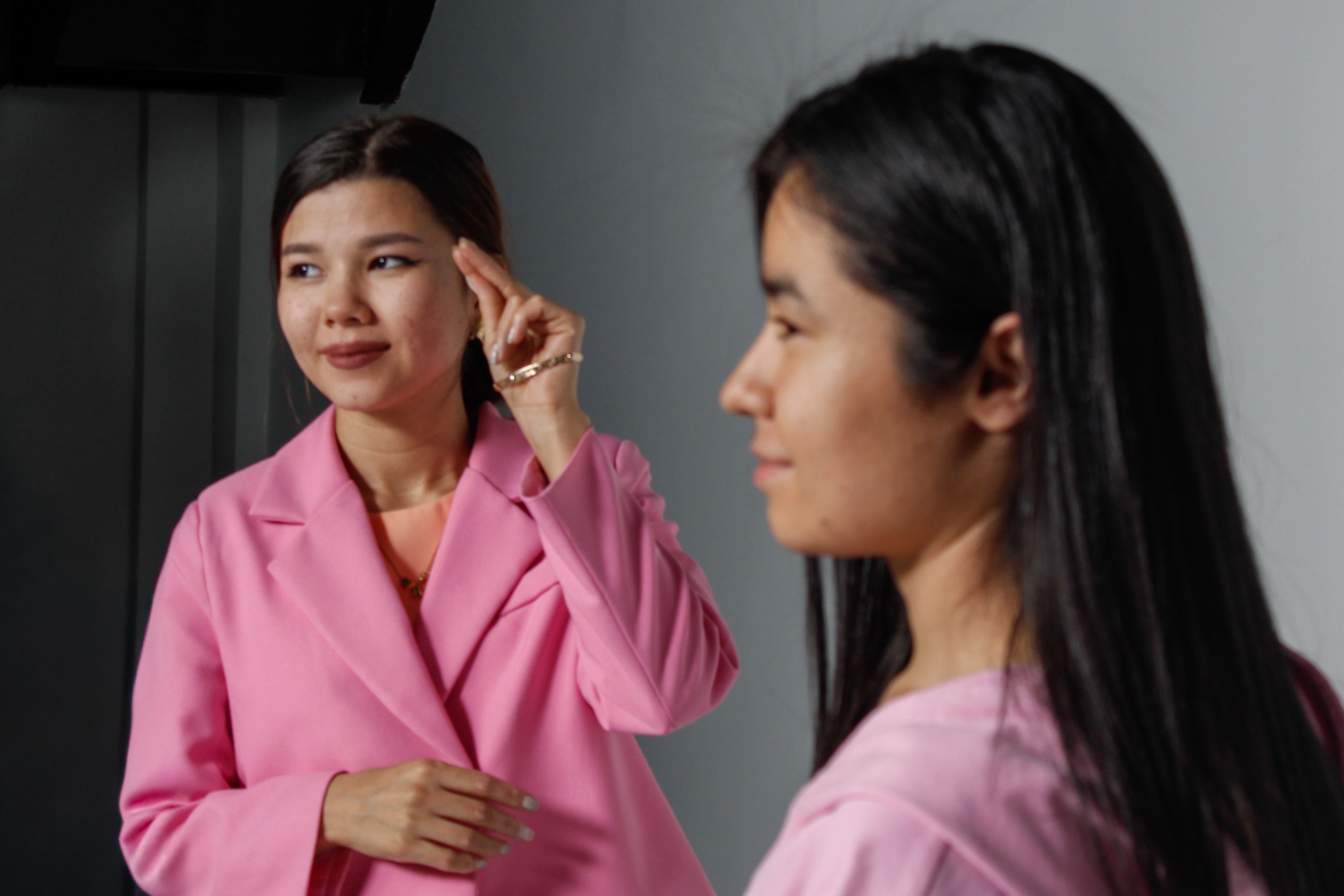
Photo: PressPhoto.uz
As part of the quietly passing International Week of Deaf People, together with a prominent deaf rights activist and blogger Mamur Akhlidinov we wrote an op-ed for Gazeta.uz. We analysed whether the rights of deaf people in Uzbekistan to use sign language are being ensured, drawing on interviews with interpreters and members of the Uzbek deaf community themselves.
This year the International Week of Deaf People is observed from September 22 to 28. Its culmination is the last Sunday of September — the International Day of Deaf People. On September 23, the International Day of Sign Languages was marked under the slogan: “No Human Rights Without Sign Language Rights!” According to the World Federation of the Deaf, there are more than 70 million deaf people worldwide, using over 300 different sign languages.
According to the latest data from the Society of the Deaf of Uzbekistan, more than 22,000 people and about 8,000 children with hearing impairments are registered with the organisation. It is difficult to find fresher official figures from the National Agency for Social Protection on the number of deaf and hard-of-hearing people in the country, as the available data is only broken down into three disability groups without any categorisation by types of impairments.
Every person is born with human rights. For deaf and hard-of-hearing people, the realisation of the right to sign language is fundamental for full access to quality education, employment, and participation in public life. By ratifying the UN Convention on the Rights of Persons with Disabilities (CRPD) in 2021, Uzbekistan undertook obligations, in particular under Articles 2, 21, and 24, to officially recognise Uzbek Sign Language (UzSL) as a full-fledged language.
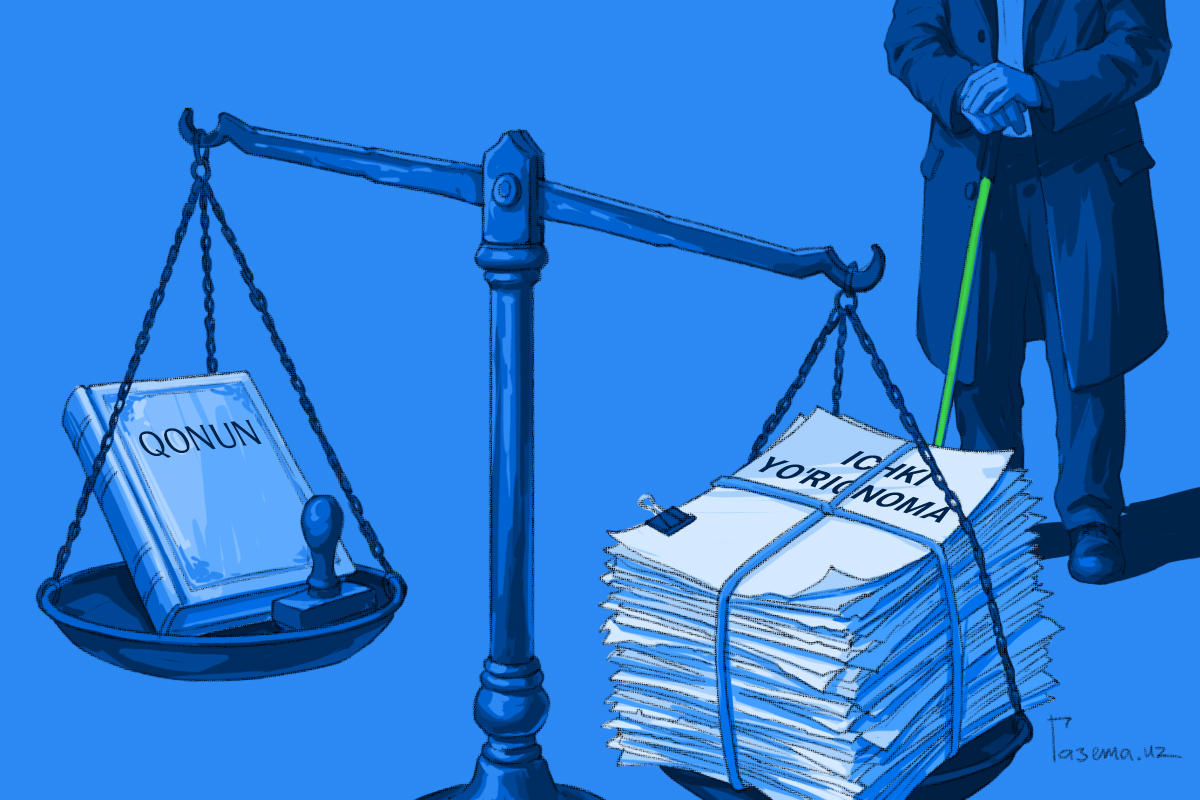
Ratifying the CRPD meant acknowledging that UzSL is not merely a means of communication, but a full-fledged language and part of the country’s cultural and linguistic diversity. However, according to Article 28 of the Law “On the Rights of Persons with Disabilities,” sign language is recognized only as a “means of interpersonal communication.” This current status lacks the crucial element of recognising sign language as a full linguistic system — that is, a language.
As long as sign language is seen merely as a “means of communication” and not a full-fledged language, the state has no direct obligation to provide education in it, deliver government services, train professional interpreters through university programs, or support it as part of the nation’s cultural heritage. In essence, the law assigns sign language a secondary, “casual communication” status, which hinders its development at all levels.
Looking at recent progress in social protection for people with hearing impairments, we can see how far Uzbekistan has come, but also how much remains to be done. Like in many countries, the path forward is still full of challenges, the most pressing being communication barriers for equal access to information and education, a severe shortage of professional interpreters of UzSL, the incomplete legal recognition of the language, and other issues in guaranteeing the rights of deaf and hard-of-hearing people.
Limited access to everyday information
Deaf and hard-of-hearing people in Uzbekistan still face barriers to real-time information access. Their daily communication with society is made more difficult by the lack of interpreting services in UzSL. This was especially evident during the COVID-19 pandemic, when, at the onset of the crisis, people with hearing impairments could not reach the 1197 hotline in time for assistance. Sign language interpreters played a critical role in transmitting vital information to the deaf and hard-of-hearing community.
Unfortunately, at present, only the most important information is broadcast on national television channels with simultaneous UzSL interpretation. While the “degree of importance” is determined by broadcasters themselves, not by the local deaf community. This is far from sufficient and severely restricts everyday access to information.
Today, Uzbekistan has about 25 state and commercial TV channels. Yet, only a handful provide news with UzSL interpretation. For example, on the 24-hour news channel Uzbekistan 24, daily news is interpreted only twice — at 14:00 and 15:00 — lasting 15–20 minutes each. On most other channels, access for viewers with hearing impairments is extremely limited. Encouragingly, translation has recently appeared on channels such as Tashkent, Mahalla, Yoshlar, and Sport, but only occasionally and without consistency.
There are also technical shortcomings. International standards require the interpreter’s window to take up at least a quarter of the screen, with the interpreter visible from the waist up against a plain light background, ensuring gestures and facial expressions are clearly visible. In Uzbekistan, these basic accessibility standards are often ignored.
The poor accessibility of national TV can partly be explained by the acute shortage of professional sign language interpreters. A 2022 presidential decree created three-month UzSL courses at Ishga Marhamat mono-centres. Since 2023, bachelor’s degree programs in UzSL interpreting have been introduced at the National Pedagogical University and several other institutions, but the first graduates are expected only next year.
“In Tashkent, there are interpreters, but in the regions it’s almost impossible to find one. Even in the capital, not everyone can afford their services,” said a sign language teacher at one of the Ishga Marhamat centres.
For decades, due to the absence of a professional training system, interpreters were mainly hearing children of deaf adults (CODAs). As a result, there is now a severe shortage of specialists. In Tashkent and the surrounding region, about 10 interpreters serve 5,000 deaf people, while in the regions the situation is worse. Other estimates suggest fewer than 10 qualified interpreters in the capital — roughly one per 800 people with hearing disabilities.
“When interpreters are needed most, they’re already booked. We definitely need more interpreters, and it would help if operators were available in major public institutions — banks, schools, hospitals — for remote interpreting through video calls,” suggested a deaf woman.
A survey by the Yuksalish nationwide movement among 102 people with hearing disabilities in 2024 showed that over half (56%) “always” or “often” face difficulties using sign language. In total, almost 90% experience problems at least periodically, and only 6% reported never encountering such issues.
“The problem is that interpreters are critically few, and they’re always busy. Hiring one is expensive — as if we’re paying for a foreign language interpreter. But sign language is our native language, not a foreign one,” said a hard-of-hearing man with a second group of disability.
Many deaf people try to cope by writing short notes, but this is not a universal solution. Due to limited access to quality education, some cannot even write their own names. For them, the absence of interpreting services means complete social isolation.
Unlike Russia and Kazakhstan, where the state guarantees 40 and 30 hours of interpreting services annually, Uzbekistan has no such legal provision. Interpretation is not included in the list of state-guaranteed social services, despite proposals from the Uzbek Society of the Deaf. A more flexible system could guarantee a set number of interpreting hours annually for people having hearing impairments with first- and second-group of disability, provided centrally through social service centers like Inson. This would also support the emerging interpreting profession.
Instead of the unrealistic goal of assigning a UzSL interpreter to every government institution — especially given the shortage of specialists — it is necessary to introduce a more flexible and effective system. An optimal solution would be to guarantee each deaf and hard-of-hearing person with a I or II disability group a certain number of interpreting hours per year.
This service could be provided centrally, for example through the Inson social service centers, within the recently introduced Faol hayotga qadam (“Step into an Active Life”) programme. Such an approach, based on the real needs of individuals, would allow deaf people to receive assistance exactly where and when it is needed. This measure would not only protect the rights of the deaf but also create a full-fledged interpreting services market in the country, providing jobs for graduates of the new bachelor’s program in “Sign Language Interpreting.”
“There are two problems. First, finding an interpreter, since there’s no unified database. Second — finding someone you can trust. We need a national database of interpreters and better online services,” explained a young deaf man.
The introduction of modern solutions, such as surdo-online tablets for online interpreting in public service centers, does not fully solve the problem and may instead create the illusion of accessibility in certain institutions.
“Once, when I was at a bank, there was a tablet and a sign with an ‘Ear,’ indicating that sign language interpreting was available. When I asked to use it, they spent half an hour trying to turn it on, but couldn’t get through. It turns out it was installed just for show,” a woman with a hearing impairment said in disappointment.
The case at the bank, where the equipment did not work, is a vivid example of how good initiatives are implemented merely “for show,” without proper testing of functionality or staff training. As a result, the technology does not help, but instead causes additional frustration within the deaf community.
A profession without standards
One of the systemic reasons for the shortage of qualified specialists is the complete absence of professional standards for sign language interpreters in Uzbekistan. As of today, the country has neither an officially recognised profession of “Uzbek Sign Language Interpreter” nor a national standard for providing such interpreting services. This creates a paradoxical situation: a field that requires the highest level of linguistic and ethical training remains entirely unregulated. The lack of standards means there are no clear requirements for education, experience, or skills, which devalues the work of true professionals and opens the door for unqualified specialists to enter the market.
For comparison, Russia has built a clear and multi-level system. There, a professional standard has been established, which includes four qualification levels for interpreters of Russian Sign Language (RSL): from Category III (Level 5) to the highest expert category (Level 7). Each level sets specific requirements for education, work experience, and the complexity of tasks performed.
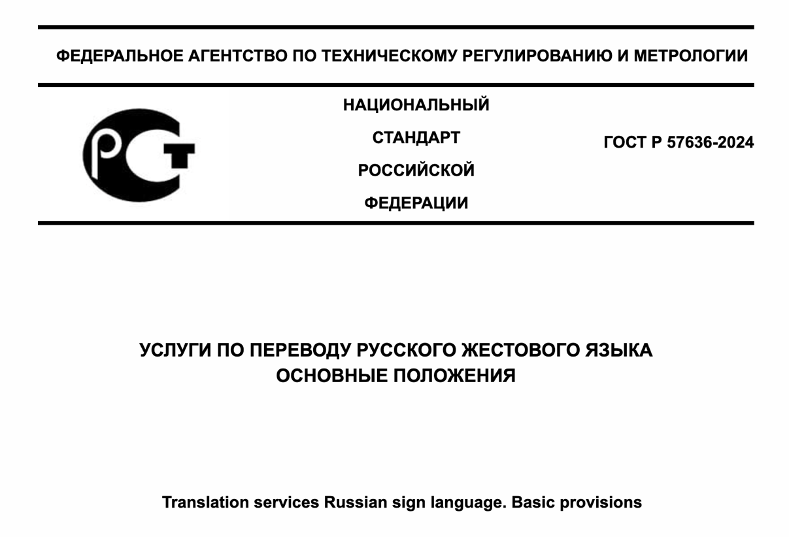
Moreover, there is the “Regulation on the Certification Procedure for RSL Interpreters,” approved by the All-Russian Society of the Deaf (VOG). This system not only allows for an objective assessment of a specialist’s level but also creates a clear career path for interpreters, motivating them toward continuous professional development.
The absence of a similar system in Uzbekistan creates a vicious cycle. Without standards and certification, it is impossible to guarantee the quality of interpreting in critical situations — in courts, hospitals, or educational settings. Young people see no prospects in a profession that lacks career growth and official recognition of their skills. At the same time, public and private organisations have no benchmarks for hiring specialists or evaluating their work.
The Society of the Deaf of Uzbekistan should play a leading role in addressing these issues. An important achievement of the organization has been the launch, since 2023, of bachelor’s programs for sign language interpreters at universities across the country. The next logical step should be the joint development of a UzSL curriculum for training specialists, the establishment of professional standards, and a certification system, so that graduates can enter a regulated and respected profession with clear career prospects. Developing these standards is an area where the expertise and initiative of the Uzbek Society of the Deaf Society are especially needed to consolidate the progress achieved and elevate the profession to a new professional level.
Back in October 2022, by presidential decree (PP-407), the responsible government agencies were tasked with creating a linguistic dictionary of Uzbek Sign Language (UzSL) and corresponding educational materials by June 1, 2024. However, based on publicly available information, this task was not completed within the set deadline.
As a result, the work of creating an online UzSL dictionary in the form of a website and mobile application has been taken on by our NGO Sharoit Plus. Thus, a project critically important for the deaf community, initially initiated by the state, is now being implemented by civil society with limited government support.
Bringing in “emotional” interpreters on the Uzbek TV
Our analysis has shown that most deaf and hard-of-hearing people in Uzbekistan do not fully understand simultaneous interpreting on TV. To make an analogy, for a deaf person, simultaneous interpreting is like incomprehensible noise on the television for a hearing person. How can anyone watch TV under such “noise”?
“I often notice that not all interpreters translate clearly. I think they need to learn the language from its native users — deaf people who are fully fluent in it,” shared a young woman with a hearing disability.
In developed countries, this problem is already addressed by involving deaf interpreters alongside hearing interpreters. It has been proven in practice that using two interpreters simultaneously significantly improves the quality of simultaneous interpretation.
For example, in the United States, services of deaf, or so-called “emotional,” interpreters are widely available. Hearing interpreters often translate without much emotion — not moving their shoulders actively or using facial expressions. But in sign language interpretation, all parts of the face must be engaged to convey the full emotional tone of the information.
It is the movement of the interpreter’s entire face and body that allows deaf people to receive high-quality information. Since a deaf interpreter is themselves a native user of the language, they understand how to clearly convey the meaning of a word, phrase, or sentence in context so that it is comprehensible and accessible to other sign language users.

Every sign language is complex and unique. It consists of hand movements and facial expressions in an approximate 40-to-60 ratio. As seen in the photo above, the interpreter’s facial expressions play a crucial role in the translation process. Not all hearing interpreters can accurately convey the full range of emotions through facial expressions. In addition, there are many other nuances required for a deep understanding of deaf people’s speech.
Therefore, specially trained and certified deaf interpreters could effectively serve as intermediaries between the hearing and deaf worlds. This would allow deaf viewers to feel comfortable watching not only the news but also enjoy entertainment programmes. Moreover, engaging deaf interpreters could help address critical issues such as the employment of deaf people and the shortage of qualified interpreters mentioned earlier.
Still no subtitles on television
The problem of access to information is further exacerbated by the widespread absence of open or closed captions on national television, Uzbek YouTube channels, and other video content on social media. As early as 2019, we already wrote about the need to implement captions and proposed automation solutions based on speech recognition. However, no response was received from the Uzbek State National Television and Radio Company or the relevant authorities at that time.
Today, with the development of artificial intelligence (AI) and real-time speech recognition technologies, creating high-quality automatic captions has become possible with minimal resources. The lack of this basic feature in 2025 is no longer a technical issue but a direct neglect of the rights of deaf and hard-of-hearing people in Uzbekistan, especially those who acquired a hearing impairment and have limited proficiency in UzSL.
About the authors
Dilmurad Yusupov — Independent researcher, PhD in Development Studies, Institute of Development Studies, University of Sussex (UK).
Mamur Akhlidinov — Blogger at akhlidinov.uz and activist advocating for the rights of deaf and hard-of-hearing people in Uzbekistan, candidate for the Master of Law in Mass Media at Tashkent State University of Law.
The op-ed was first published at Gazeta.uz in Russian on 28 September 2025.