First time for Central Asia: Kazakhstan’s Lyazzat Kaltayeva was elected to the UN Disability Rights Committee
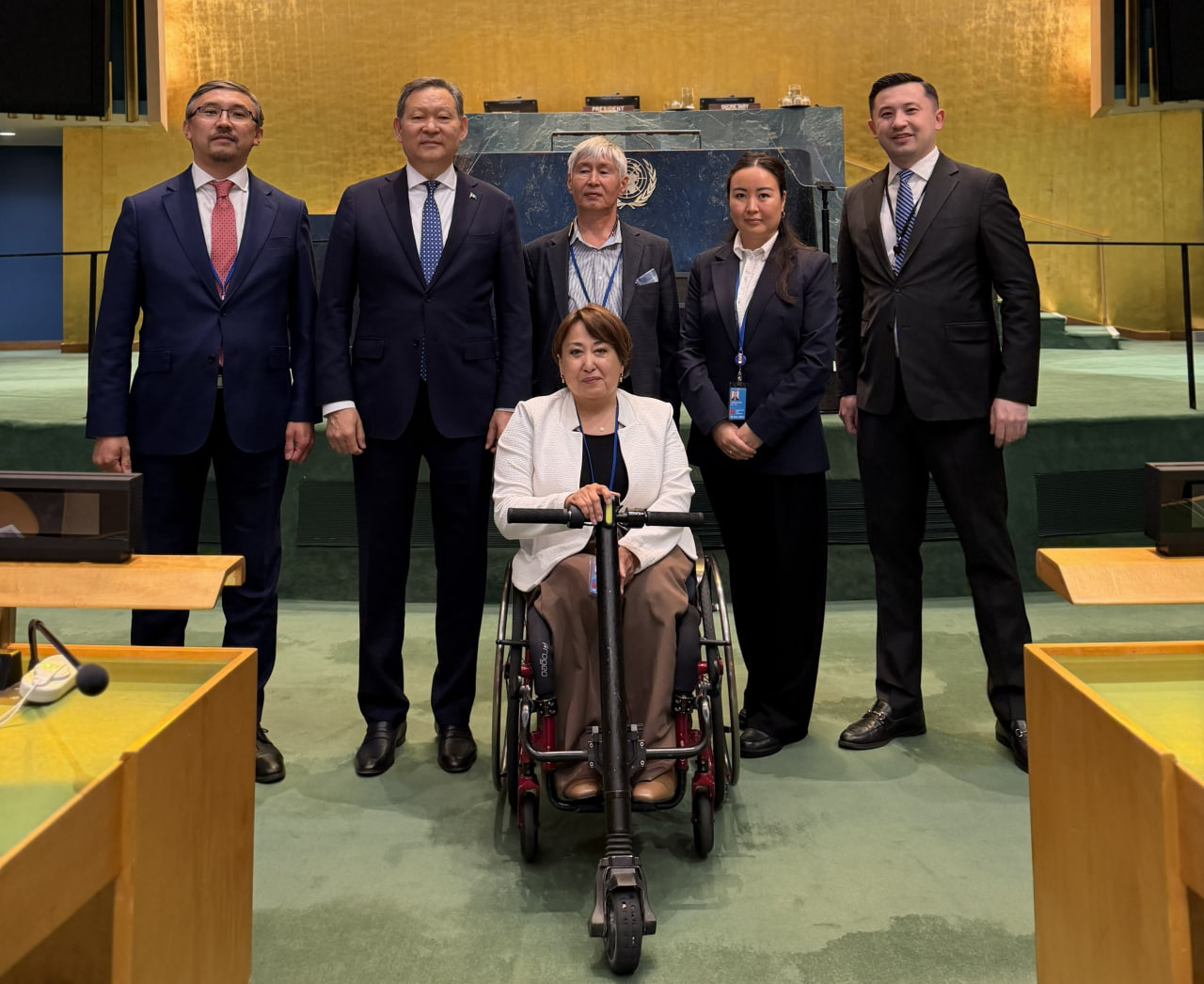
Photo: Permanent mission of Kazakhstan to United Nations
On June 9, 2026, something quietly historic happened at the United Nations headquarters in New York. At the 19th session of the Conference of States Parties to the Convention on the Rights of Persons with Disabilities (CRPD), Lyazzat Kaltayeva of Kazakhstan was elected to the UN Committee on the Rights of Persons with Disabilities for 2027-2030.
Lyazzat has become the first representative from Central Asia ever to serve on this body. She received 157 votes, the highest tally of any candidate in the election. For those of us working on advocating for disability rights in the region, this is not a small footnote. It is a landmark!
Who Is Lyazzat Kaltayeva?
Born in 1965, Lyazzat Kaltayeva’s path into disability activism began not in a lecture hall or a policy office, but in a moment of personal rupture. At the age of seven, she sustained a spinal cord injury in a car accident. Like countless disabled children in Soviet Kazakhstan at the time, she was made to study at home — isolated from her peers and from mainstream social life, a product of a system that saw disability primarily as a medical problem to be managed rather than a civil rights issue to be confronted.
She was fortunate in one crucial respect: her family refused to give up on her. With their support, Lyazzat pursued education against the odds. She eventually graduated from the All-Union Correspondence Institute of Arts with a degree in graphic and easel painting, and later from the Abay Kazakh Pedagogical Institute. But it was not until adulthood, looking back at the barriers her family had to navigate just for her to study, work, and participate in society, that the full weight of structural exclusion became clear to her.
“Only now do I realize how many barriers my family had to overcome for me to be able to study, work, communicate and have a family,” she has said.
From Personal Experience to Mobilising Civil Society
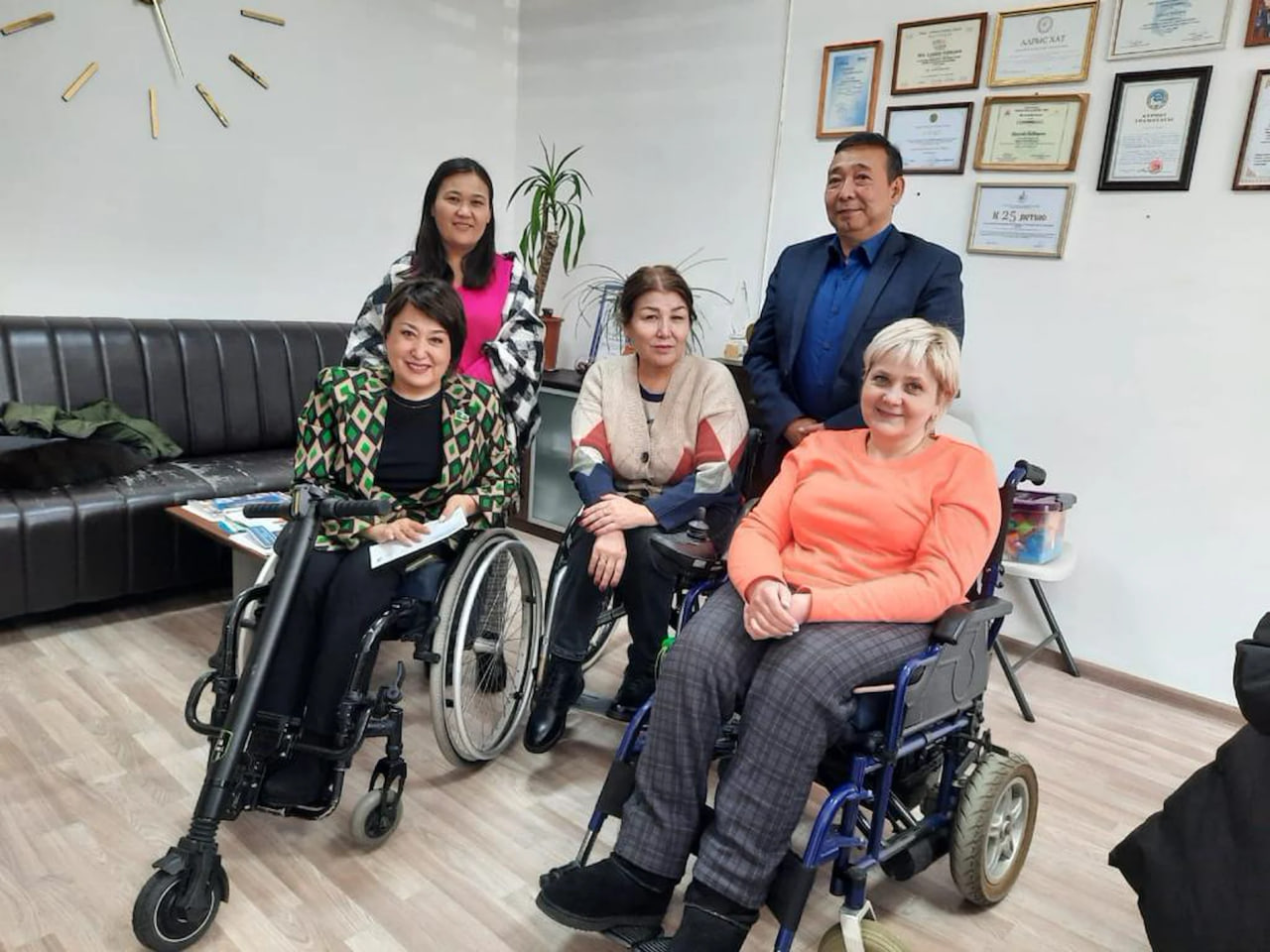
Ms. Kaltayeva did not choose the charity model — the kind that frames disabled people as recipients of compassion rather than holders of rights. From the very beginning of her advocacy career, she staked out a principled alternative: the human rights-based approach to disability. Lyazzat has been promoting inclusion in Kazakhstan for over 20 years
In 2001, she founded the Association of Women with Disabilities “Shyrak”, based in Almaty. Over the following two decades, Shyrak grew into a network of nearly 3,000 women with disabilities across Kazakhstan, active across more than 50 projects spanning four strategic areas: education and social inclusion; legal protection and rights advocacy; organizational development of the disability movement; and regional solidarity-building across Central Asia.
The mission was unambiguous — not pity, but power. Not rehabilitation, but rights. “The values of the organization are diversity and equality, participation and development, dignity and justice,” she has stated.
Her regional ambitions extended beyond Kazakhstan’s borders. She went on to chair the Central Asian Disability Forum (CADF) and built the Central Asian Network of Leaders and Organizations of Women with Disabilities — an infrastructure of cross-border solidarity that had no precedent in the region. In 2007, she led the first-ever sociological research on the situation of women with disabilities across Kazakhstan, Kyrgyzstan, and Tajikistan. These weren’t symbolic gestures. They were the deliberate construction of a movement.
From Civil Society to the Halls of Power
For all her civil society achievements, Kaltayeva understood that advocacy without access to legislative power has a ceiling. She crossed that ceiling in stages.
From 2016, she served as a deputy in the Almaty maslikhat (local council). Then, in January 2022, by presidential decree, she was appointed to Kazakhstan’s Senate — the upper chamber of parliament — becoming the first senator to formally represent the country’s 700,000-plus people with disabilities. In that role, she served as a voice for CRPD ratification and alignment of national legislation with international standards, including Kazakhstan’s accession to the Optional Protocol to the Convention.
Simultaneously, she has held roles as a member of Kazakhstan’s National Council on Disability and of the National Commission for Women’s Affairs, Family and Demographic Policy under the President, as well as serving as an advisor to the Minister of Health and Social Development. She has represented Kazakhstan at multiple international forums, including the CRPD Conference of States Parties and disability-inclusive democracy events organized by IFES and the US State Department.
Kaltayeva did not arrive at the UN committee as a technocrat. She arrived as someone who has spent three decades building the movement she now represents.
What This Election Means for Central Asia
The CRPD Committee consists of 18 independent experts responsible for monitoring how signatory states implement the Convention. It reviews country reports, issues concluding observations, and interprets the treaty’s provisions through general comments that shape disability law and policy globally. A seat on this body is not merely honorific — it is a platform for shaping international norms.
That Central Asia has had no voice in this space until now is itself a diagnostic. Our region’s disability rights frameworks are, in many countries, still heavily shaped by the Soviet medical-charity model by classifying disabled people by their impairments, assigning them to segregated institutions and benefit categories, and treating participation in public life as exceptional rather than expected. Meanwhile, the most progressive interpretations of the CRPD are on legal capacity, inclusive education, deinstitutionalization, and supported decision-making have been developed and debated without any systematic input from our part of the world.
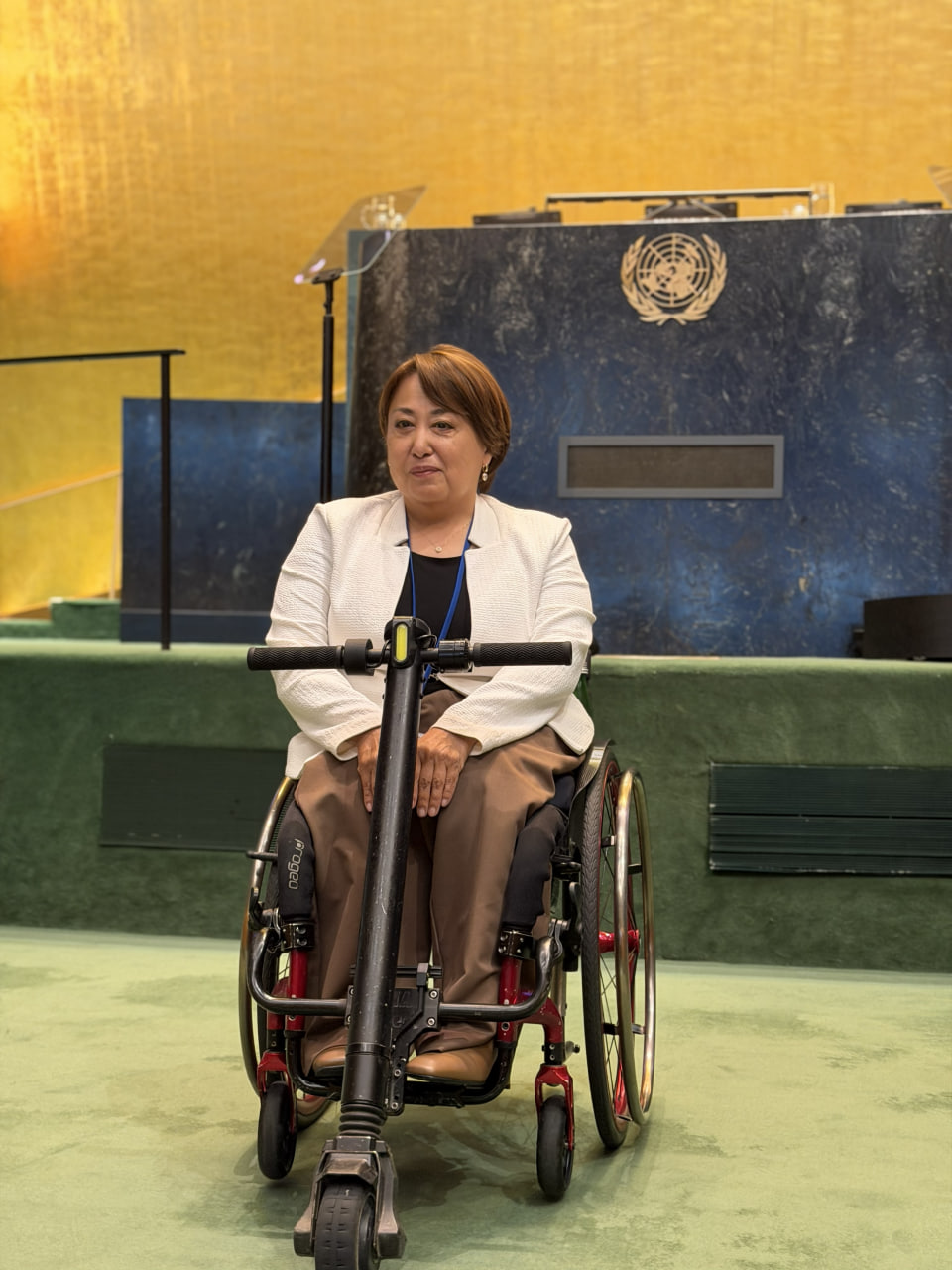
“This is the strength and competence of our civil society in Kazakhstan and Central Asian countries, organizations of persons with disabilities, activists known throughout the world for their principled position and tireless human rights work,” wrote Lyazzat on her Facebook page.
Ms. Kaltayeva’s priorities as a committee member are reported to center on key areas essential for the implementation of the Convention in our region:
- full inclusion and independent living;
- access to justice and protection from violence and discrimination;
- integrating the rights of persons with disabilities into the climate agenda, emergency response, and migration.
These are precisely the fault lines where Central Asian policy remains most entrenched. Kazakhstan, with all its own contradictions, is institutionally ahead in some of these areas compared to other countries in our region. Kaltayeva’s election creates an opportunity — for cross-border dialogue, for learning, and for accountability. As a committee member, she will be involved in reviewing CRPD state reports including, potentially, those of neighboring countries. More immediately, her visibility raises the profile of the entire regional disability rights project.
More to read:
Kazakhstan Secures Seat on UN Disability Rights Committee, First Time for Central Asia — The Astana Times, June 10, 2026
https://astanatimes.com/2026/06/kazakhstan-secures-seat-on-un-disability-rights-committee-first-time-for-central-asia/
“We Seek to Promote a Human Rights Based Approach to Disability” (2020 interview, Shyrak Association) — The Astana Times
https://astanatimes.com/2020/11/we-seek-to-promote-a-human-rights-based-approach-to-disability-says-shyrak-association-leader-lyazzat-kaltayeva/
Kazakhstan’s Prominent Disability Rights Activist Lyazzat Kaltayeva Appointed Senate Deputy — The Astana Times, January 2022
https://astanatimes.com/2022/01/kazakhstans-prominent-disability-rights-activist-lyazzat-kaltayeva-appointed-senate-deputy/
Lyazzat Kaltayeva — Make the Right Real (UN-affiliated champion profile, covers her Central Asian network)
https://www.maketherightreal.net/champions/lyazzat-kaltayeva
Ratification of the Optional Protocol in Kazakhstan — UNDP Kazakhstan, June 2023
https://www.undp.org/kazakhstan/news/ratification-optional-protocol-kazakhstan-important-step-towards-protecting-rights-persons-disabilities

