Independent Living Centers in the U.S.: breaking down barriers for disabled people

In November 2024, as part of the International Visitor Leadership (IVLP) program to the U.S. we visited the D.C. Center for Independent Living (DCCIL) which has been operating since 1981. What is behind the American “independent living” philosophy and how can such principles be incorporated in Uzbekistan?
The District of Columbia Center for Independent Living, Inc. (DCCIL) was established in April 1981 through Congressional Legislation to promote independent lifestyles for people with significant disabilities, assist them to meet their selected independent living goals and to mainstream people with disabilities into society. DCCIL is a non-profit community-based, customer-controlled, cross-disability center which is directed by with persons with disabilities to lead independent and productive lives.
CILs were founded in early 1980s to embody the values of disability culture and serve as the organizational backbone of grassroots initiatives for the civil and human rights of people with disabilities. CILs vest power in people with disabilities by ensuring they control the services, management and direction of the organization. The first CIL opened its doors in Berkley, California.
CILs base their priorities and actions on the belief that people with disabilities have the right to decide how to live, work, and participate in their communities and that we must organize for social change, so that we may as a society do away with the biases that will support a cure, but often not an accommodation that would allow persons with disabilities to participate on an equal basis.
In practice, creating an organization for people with disabilities run by people with disabilities changes the value system, the implementation, and the direction of an organization overall. According to the Rehabilitation Act of 1973, as amended, Centers for Independent Living (CILs) are required to have a management structure that ensures at least 51% of their staff, board members, and decision-making personnel are individuals with disabilities. This mandate emphasizes the principle of self-determination and ensures that CILs are run by and for people with disabilities, aligning with their mission to promote independent living and empowerment.
Core independent living services
During our visit to DCCIL Ms. Lakenya Pitchford, Independent Living Specialist, share about the background and mission of the organization.
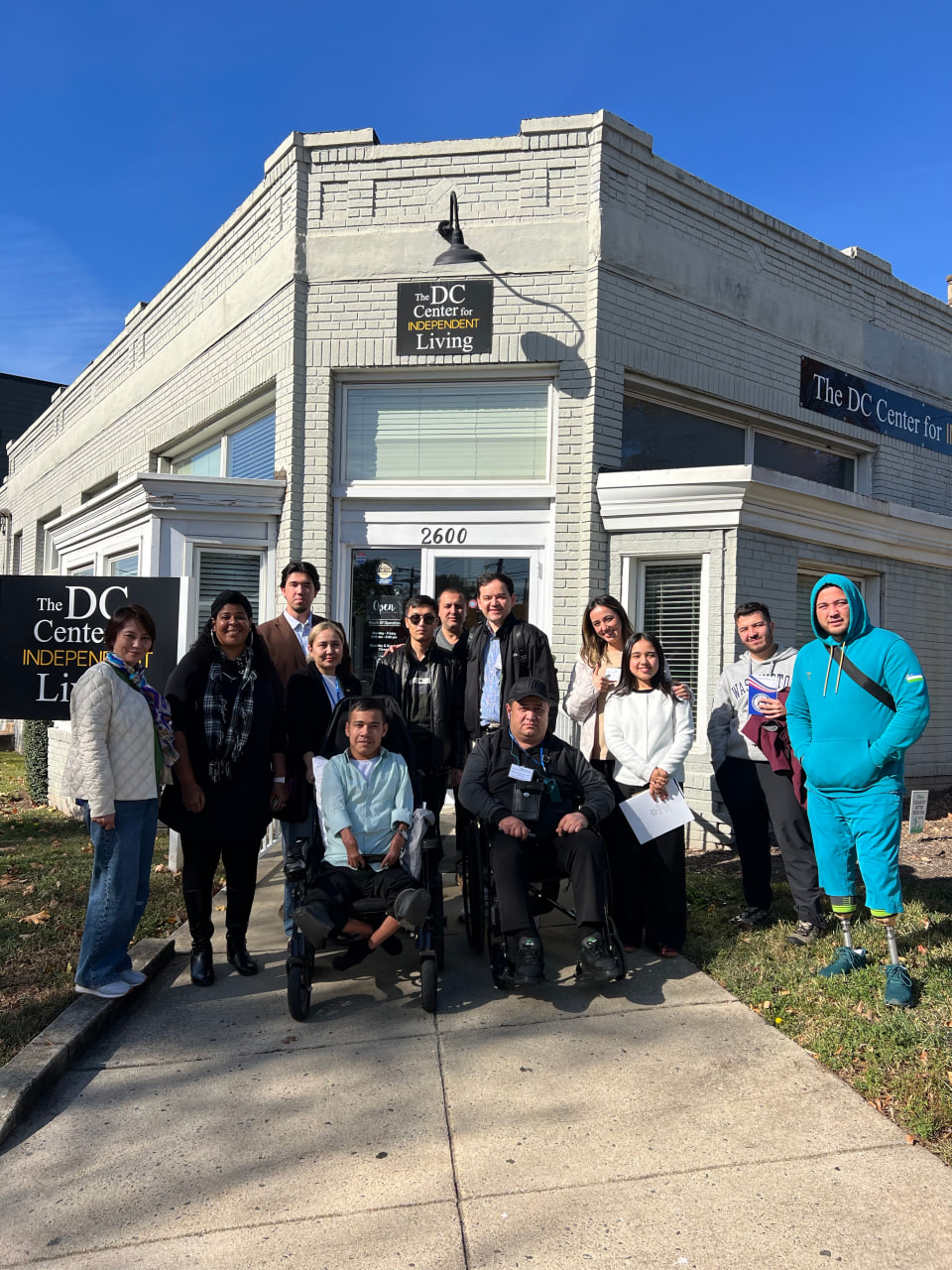
The mission of DCCIL is to maximize leadership, empowerment and independence for persons with disabilities by working to integrated and create opportunities for these citizens to be mainstreamed into society.
The 5 core independent living services include:
- Independent Living Skills Training: developing skills in personal care, coping, financial management, education, community living and participating in community activities.
- Peer Counseling Services: counseling and information sharing to enhance positive independent living outcomes to consumers by other persons with disabilities.
- Advocacy/Legal Services: assisting people to obtain benefits, rights, services and programs to which they are entitled.
- Information and Referral Services: Providing people with information where they might obtain benefits, rights, services and programs to which they are entitled.
- Transition: Helping individuals move from shelter, institutions or nursing home to a less restrictive living situation in the community and equipping teenagers and young adults with disabilities with the tools and skills they need to become fully functioning adults.
The CILs receive main funding from the federal government to finance core independent living services, including peer support, information and referral, individual and systems advocacy, and independent living skills training. This is stipulated in the Americans with Disabilities Act (ADA) and CILs implement the rights of people with disabilities in practice.
What is independent living?
It should be noted that “independent living” does not mean that disabled people do everything by themselves without anyones help. As Judy Heumann (a prominent advocate and pioneer of disability rights movement in the U.S. once said:
“Independent Living is not doing everything by yourself; rather, it is being in control of how things are done,” Judy Heumann
The American independent living philosophy is based on the idea that people with disabilities have the right to make their own decisions and live their lives on their own terms, just like anyone else. It doesn’t mean doing everything alone or without help.
It was interesting to learn about the support groups at the DCCIL which are created based on the type of disability, age, gender and other factors. In other words, CIL serves as a hub for people with disabilities to meet and form a community working on various issues. The peer counseling support is provided either on individual basis or in a group.
The five core services mentioned above are interrelated and one services leads to another. For example, the support group activities can lead to the advocacy work when the group finds that there is a need for a local change due to the ongoing discrimination based on disability. Advocacy can also be individual or system change.
How independent living can be promoted in Uzbekistan?
The concept of independent living remains largely unknown in Uzbekistan. Neither people with disabilities, nor their organisations understand it. At our disabled people’s organisation NGO Sharoit Plus in Tashkent city we recently launched a new office which has a potential to turn into the first CIL in our country. At this accessible space we should rethink how can we integrate all our ongoing services for disabled people to be provided at our HQ office so that they are interlinked and reinforce each other.

For instance, we can also list our core services in the following way:
- Sherik maslahati (Peer counseling services): we had trained first disabled peer counselors in Uzbekistan thanks to the Japanese Human Care Association which as a founding member of Japan Council on Independent Living Centers contributed to dissemination of peer-counseling and independent living program and establishment of personal assistance service system worldwide. However, our peer counseling service is not currently active and we need to revive it.
- Ta’lim Plus (Education Plus) + Kitob Plus (Book Plus): we can provide short courses for young disabled people in computer literacy (including how to effectively use Internet, smartphones, assistive technologies (e.g., voice over and talk back for blind and visually impaired people), financial literacy, personal care, mental health, etc. Such vocational life-long courses can be provided offline at our Sharoit+ co-working centre or online through a dedicated and accessible platform.
- Huquq Plus (Right Plus): we currently advocate for the rights of disabled people and provide free legal aid through our specialised web portal of legal information www.huquqplus.uz and our Telegram bot Huquq+. This service now merges two separate DCCIL services including advocacy/legal services and information/referral services. I personally think these two services should be combined.
- Ish Plus (Job Plus): disability-inclusive employment support through our specialised recruitment web portal www.ishplus.uz and its mobile app.
- Media Plus: advocacy for disability rights through production of various accessible medial products (e.g. podcasts, articles, op-eds, interviews, investigations, public monitoring, shadow reporting on CRPD). In 2024, we managed to set up a new web portal for this purposes www.mediaplus.uz but we need to work a lot to make this service active.
I believe the services related to transition should be weaved into each of the above mentioned services. We still have many institutions for disabled children and adults like “Muruvvat” internat uyi (“Mercy” disabled people’s houses) and specialised boarding schools. We need to support disabled people, particularly those young as well as with learning and mental disabilities to move from the institutions. This can be facilitated by equipping them with independent living philosophy and skills to include them into local Uzbek communities (mahallas). The idea of establishing support groups on a cross-disability basis is empowering as such networks can bring the sense of strong community and self-help.
You can learn more about the CILs though the Independent Living Research Utilization (ILRU) program which is a national center for information, training, research, and technical assistance in independent living: https://www.ilru.org/

An independent living program can make a meaningful difference for individuals who are preparing to live on their own with confidence. These programs often provide practical life skills training, including budgeting, meal preparation, employment readiness, time management, and housing support. Whether designed for young adults transitioning out of foster care, people with disabilities, or others seeking greater self-sufficiency, a quality independent living program offers the guidance and resources needed to build independence and improve long-term quality of life.